Book Appointment Now
Spinal Therapy
For over 40 years, our clinic has been a downtown staple built on trust, care, and results. Since 1982, we have welcomed patients from all walks of life through our doors. We are more than just a clinic — we are a part of this community..
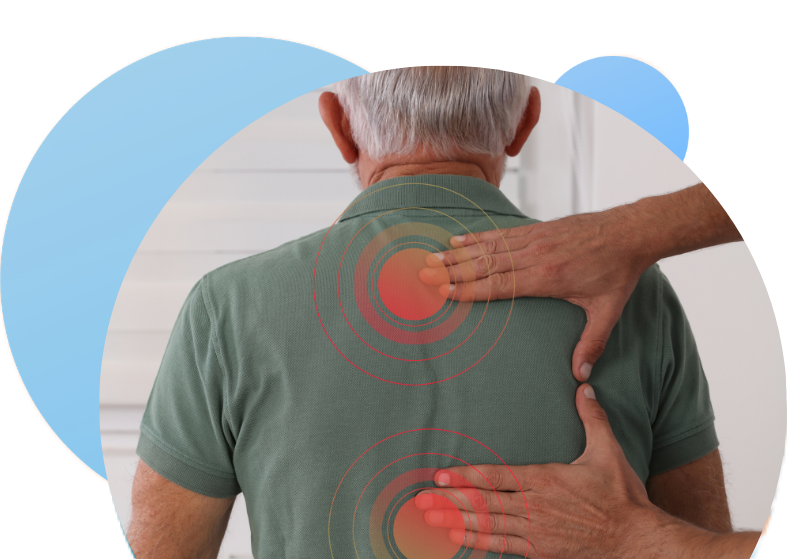
Back Pain. Neck Pain. We’ve Got You.
If you’re living with back or neck pain, you’re in very good company. It’s estimated that up to one third of the population experiences neck pain each year, and at least 85% of people will deal with significant back pain at some point in their lives. Spinal pain is one of the most common reasons people visit a physiotherapist, and the good news is that in the vast majority of cases, it responds extremely well to conservative, non-surgical treatment.
At Burrard Physiotherapy in downtown Vancouver, our experienced team has helped thousands of patients recover from spinal injuries, manage chronic back and neck pain, and build the strength and knowledge to prevent it from coming back.
Understanding Your Spine
Your spine is a remarkable and complex structure, but understanding how it works can make a real difference in how you approach your recovery.
The spine is made up of a series of bones called vertebrae, stacked on top of one another and separated by intervertebral discs. These discs act as shock absorbers, distributing the load of your body weight and allowing the spine to move fluidly. Ligaments bind the vertebrae together and provide structural stability, while muscles produce and control movement and serve as one of the most important sources of support for your back.
Each segment of the spine also includes two small joints called facet joints (also known as apophyseal joints), which guide and limit movement between vertebrae. Problems in any one of these components, whether the disc, joints, ligaments, muscles, or nerves, can contribute to pain and restricted movement.
Common Spinal Myths, Debunked
There is a lot of misinformation out there about back and neck pain, and it can sometimes make recovery harder than it needs to be. Here are a few things worth knowing:
You cannot “slip” a disc. Discs are firmly attached to the vertebrae above and below them and cannot actually slip out of place. What can happen is that a disc may bulge, become thinner with age, or in more significant cases, partially tear (prolapse or rupture). These conditions are treatable, and many people with disc-related findings on imaging have no pain at all.
Back pain does not always mean structural damage. Many cases of back and neck pain are caused by joint irritation, muscle dysfunction, or movement pattern problems rather than serious structural injury. Understanding the true source of your pain is the first step toward effective treatment.
Rest is rarely the answer. While it may be tempting to stop moving when you’re in pain, prolonged rest typically makes spinal conditions worse. Guided, progressive movement is one of the most powerful tools in spinal rehabilitation.
Conditions We Treat
Our team has extensive experience treating a wide range of spinal conditions, including:
- Acute and chronic low back pain
- Neck pain and stiffness
- Disc injuries including bulges, herniations, and degenerative disc disease
- Sciatica and lumbar radiculopathy (radiating leg pain)
- Cervical radiculopathy (radiating arm pain and numbness)
- Facet joint dysfunction and spondylosis
- Spinal stenosis
- Muscle strains and ligament sprains
- Postural pain from prolonged sitting or desk work
- Post-surgical spinal rehabilitation
- Scoliosis management
- Sacroiliac joint dysfunction
- Whiplash and motor vehicle accident injuries
- Headaches originating from the cervical spine
How We Treat Spinal Conditions
At Burrard Physiotherapy, we take a thorough, individualized approach to spinal care. Your treatment begins with a comprehensive assessment of your posture, movement, strength, flexibility, and neurological function so we can identify exactly what is driving your pain.
Treatment may include:
- Manual therapy including joint mobilization and manipulation to restore mobility and reduce pain
- Soft tissue therapy to address muscle tension, trigger points, and fascial restriction
- Gunn IMS (intramuscular stimulation) for chronic or neuropathic spinal pain
- Real-Time Ultrasound to assess and retrain deep spinal stabilizing muscles
- Exercise therapy tailored to rebuild core strength, spinal stability, and movement confidence
- Postural and ergonomic education to address the workplace or lifestyle factors contributing to your pain
- Pain science education to help you understand your symptoms and feel confident moving again
We believe that the best outcomes come from combining effective hands-on treatment with building your own knowledge and capacity to manage your spine long-term.
Prevention Is Part of the Plan
One of the most important things we do at Burrard Physiotherapy is help you understand why your pain developed and what you can do to prevent it from recurring. Spinal health is not just about recovering from the current episode. It’s about building the habits, strength, and body awareness that protect your spine for years to come.
Our team will give you the tools, exercises, and education you need to stay out of pain and keep moving freely through all the activities you love.